
From Overhead to Stewardship: Making the Invisible Visible
This is part two of a two-part series on overhead expense within faith communities. This previous post proposed a re-framing of how to think about overhead expense. This post suggests how to empower ministry leaders with this re-framing.
In my previous post (Overhead is Sacred Investment - Why this Matters Now), I argued that overhead in a faith community is not merely an administrative burden but a sacred expense, i.e. the cost of sustaining space so that people can gather in real life.
This post turns to a more practical question: How do we talk honestly about these costs without reducing mission to spreadsheets or losing people in accounting jargon?
The answer begins by making the invisible visible.
What “Overhead” Actually Is (and Why It’s So Easy to Ignore)
Overhead is often treated as a catchall category: something administrators know must be paid, but few people feel connected to. In reality, it is a specific set of fixed costs that exist wherever physical space exists. At a minimum, these typically include:
electricity and heating/cooling
water and sewer
property and liability insurance
basic building maintenance
These costs are not optional. They do not tend to fluctuate month to month (other than potential seasonality flux e.g. heating costs increasing in December). And they do not disappear if attendance dips or programming slows. This is why we call them ‘fixed’ costs; they are bedrock expenses ever-present in the mind of any effective administrator. Much like housing costs (mortgage, utility bills, condo fees) live ever-present in the mind of any homeowner.
The Cost Pressure Is Real … and Measurable
The cost of space tends to increase over time.
Consider this simple fact: in Hudson County, where I live, work, and volunteer, the price of real estate has increased from approximately $246 per square foot in 2016 to over $500 per square foot in 2026. This increase reflects broader market pressure. Anyone who rents or owns property locally has felt some version of this shift.
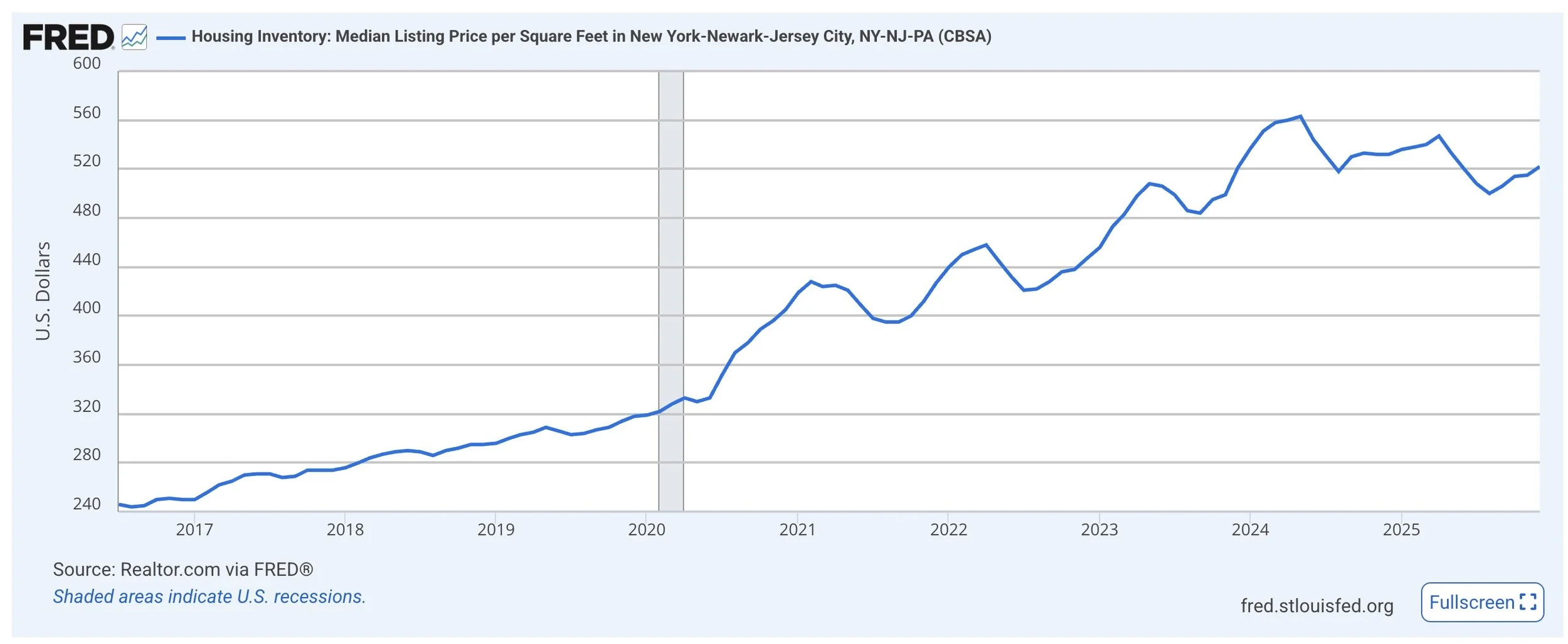
Image courtesy of the Federal Reserve Bank of St. Louis
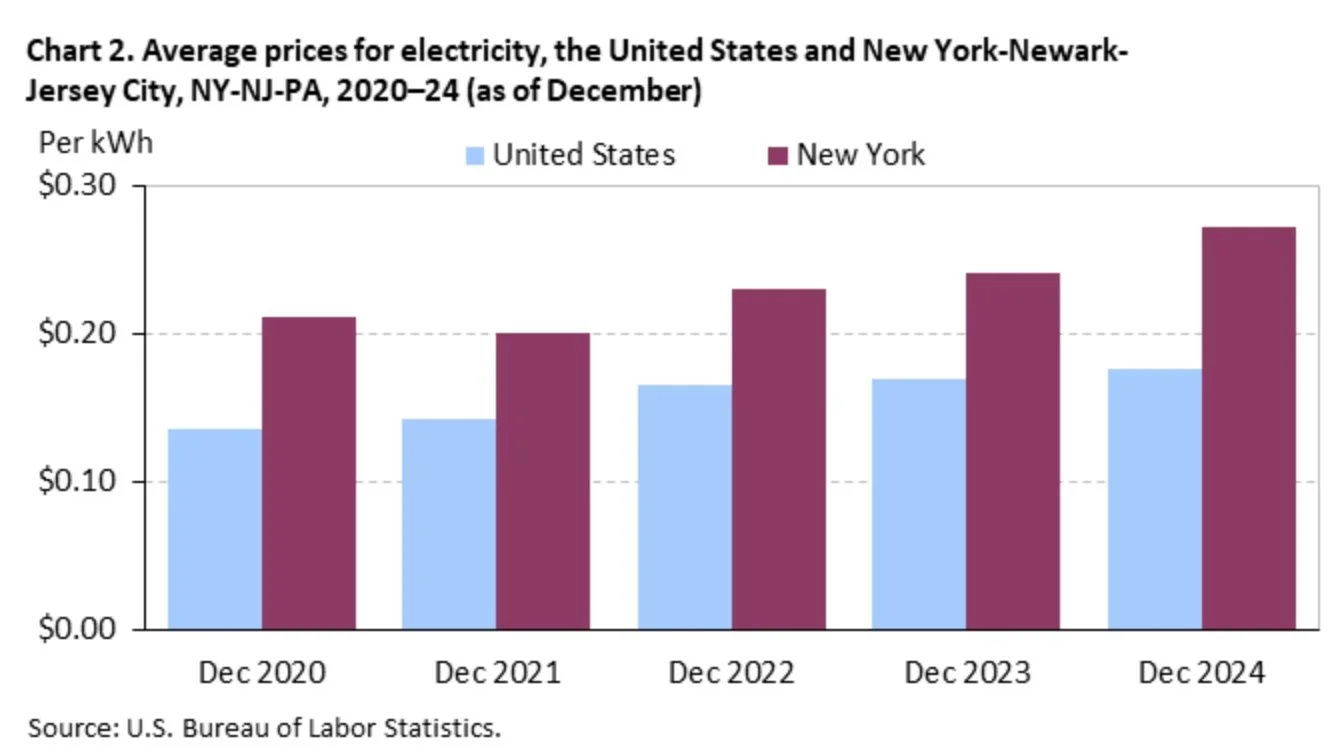
Utility costs tell a similar story. According to data published by the U.S. Bureau of Labor Statistics for the New York metropolitan region, average energy prices have increased over time across multiple categories. While the exact figures vary by utility and year, the direction is consistent: it costs more to heat, cool, and power physical space now than it did even a few years ago.
Taken together, these two data points - rising cost per foot and rising utility costs - point to a structural reality: faith communities are operating in an environment where simply keeping doors open requires a greater financial commitment than in the past. Homeowners, renters, business owners already know this.
When those costs are absorbed quietly, without being named, the true scale of what is being supported remains invisible. But when we name them, we should trust leaders to orient their scope; that trust is part of shared ownership.
Why These Costs Are Structurally Different from Program Expenses
Most ministry expenses feel tangible. People can picture candles, hymnals, outreach supplies, or food pantry purchases. Overhead does not produce a visible “thing,” so it can feel abstract - and remain invisible - even though it underwrites everything else.
A useful distinction is this:
Program expenses support what we do
Overhead expenses support where and how we gather to do it
Without the second, the first cannot happen.
How Leaders Can Name These Costs Clearly (Without Losing the Room)
Clarity does not require complexity. In fact, the simpler the framing, the more trustworthy it feels. Effective leaders:
name overhead early, not defensively
explain what it supports in plain language
connect it explicitly to mission and use
When we name these costs honestly and clearly, we invite shared responsibility; that can be energizing and empowering.
For parishes seeking structured support, my parish advisory and consulting services are outlined here.
